How Statistics Is Used in Everyday Life
Statistics often remind us of data tables, charts, and calculations, but they are far more deeply woven into our daily lives than most of us realize. Whether you are checking the forecast before stepping out, scrolling through a curated feed, observing how government policies shape your environment, applying for a loan, or choosing a salon based on ratings, you are constantly interacting with statistical models. Here are some of the most common everyday scenarios where statistics come into play.
Weather Forecasts
Weather forecasts might seem like simple observations on the surface, but they are the results of rigorous statistical analysis. Every time you grab an umbrella before you head out because there is an 80% chance of rain, you are responding to a statistical probability. Meteorologists analyze historical temperature, humidity, wind data, and other factors to identify weather patterns. Probability models estimate the likelihood of certain weather events. Simulation models compare current atmospheric conditions with past data. Even predictions about potential natural calamities such as cyclones or heatwaves are based on statistical forecasting models that analyze trends and variability over time.
Social Media and Online Platforms
It does not come as a surprise that our social media and other online platform feeds are heavily curated. They constantly push the type of content we are most likely to enjoy, and these are not accidental placements. Research shows that various statistical models analyze user activity, such as clicks, time spent on posts, engagement patterns, and viewing history, to personalize content. As a result, the system identifies and presents content that users are most likely to engage with.
Public Policy Formulations
Government authorities rely on various data and statistical tools to design public policies.
They collect and analyze data on population growth, employment rates, health concerns, education levels, and economic performance in a specific area to identify concerns that need to be addressed and various initiatives to resolve them.
Banking and Finance
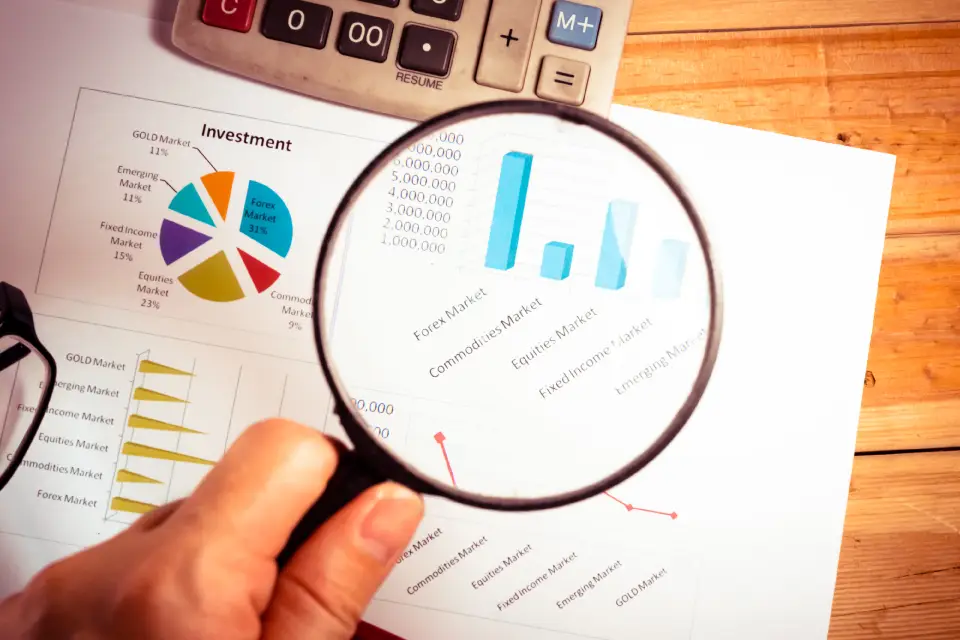
Statistics play a huge role in modern banking and finance. Various statistical models are used to measure factors such as a customer’s income, repayment history, and debt levels to generate a credit score that reflects their likelihood of repayment. These same models extend to interest rate determination, where the estimated probability of default allows lenders to adjust rates in proportion to risk. Beyond lending, investors also make use of historical market data to identify trends, assess risk, and estimate expected returns across various schemes.

Regular Decisions
Statistics sneak into our daily decisions without us realizing it. When you pick a salon with a high average rating, you are relying on a statistical summary of customer reviews. That rating represents an average calculated from a sample of opinions. When you judge a new product based on a few reviews, you are sampling data and forming conclusions. Even when you form an opinion about a person after a short interaction, you are making an inference based on that data.
Conclusion
Statistics is essentially the science of collecting, analyzing, and interpreting data and, it surrounds us everywhere. Developing a fundamental understanding of how statistics work not only helps us make smart and informed decisions but also gives us a clearer picture of the world we live in, making it a handy tool for everyone. Interested in learning more about statistics? Check out THORS’ latest course, Statistics Basics.