When one controller stops, an entire production line can stop with it, and the bill adds up fast. PLC downtime is the time a production line stands still because its Programmable Logic Controller (PLC) has failed or stopped responding. A PLC is a rugged industrial computer. It reads sensors and switches motors, valves, and other devices to run a machine. Plants often rely on dozens of them, so one fault can stop a whole line.
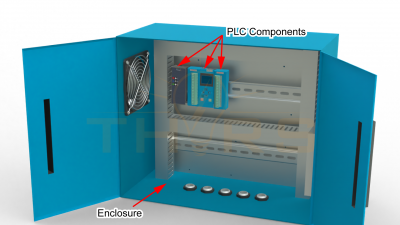
Most PLCs sit inside a metal cabinet on the plant floor, close to the machines they control. That closeness is useful, but it also means the PLC shares its surroundings with motors, pumps, and conveyors.
Unplanned downtime means a stop that nobody scheduled. Siemens, a German technology company, found in its 2024 True Cost of Downtime report that unplanned downtime costs the world’s 500 largest companies about 1.4 trillion US dollars a year. That equals 11 percent of their revenues. In automotive plants, one idle hour costs up to 2.3 million US dollars. Inside Supply Management, a supply management trade magazine, summarized these findings. The figures cover every kind of equipment failure, not only PLC faults. They still show what a stopped line costs. The bill has several parts, and most of it never appears on the repair invoice.
How PLC Downtime Stops Production
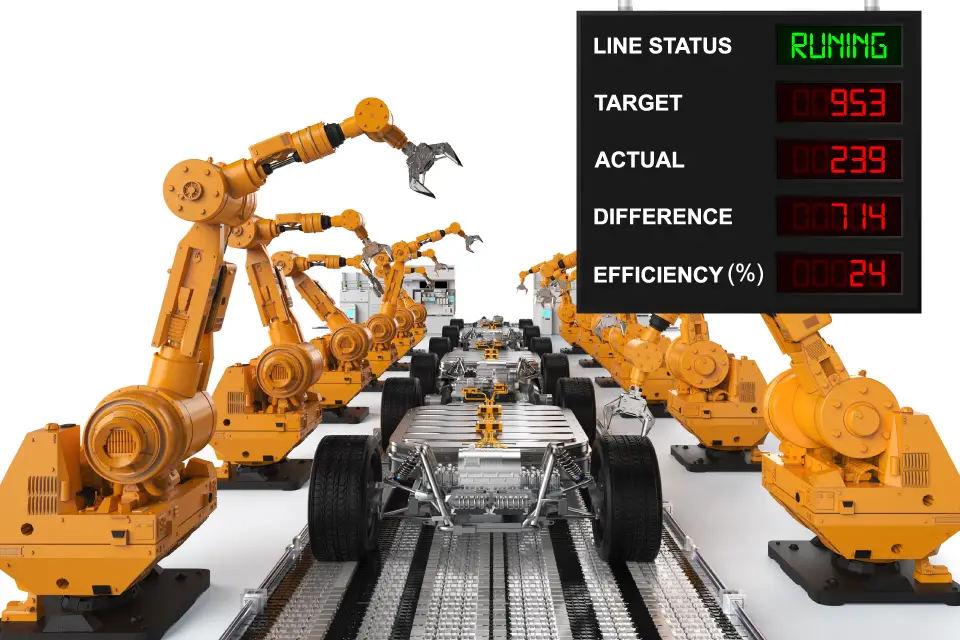
A plant rarely makes up lost goods later without extra shifts. A PLC coordinates the steps of a line, so PLC downtime at one controller can halt every station linked to it. The same magazine article also covers a survey by ABB, a Swiss electrical equipment maker. ABB surveyed more than 3,200 plant maintenance leaders. Two thirds of their companies faced unplanned downtime at least once a month, at a cost of about 125,000 US dollars an hour. For example, in an automotive assembly plant, one stopped welding cell holds back every station after it.
Scrap and Rework
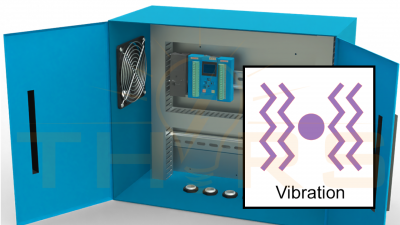
Scrap is material that can no longer be sold. Rework is extra work to correct a product that came out wrong. A controller that fails in the middle of a cycle can leave products half finished, and those products may be scrapped or reworked. Faults that come and go, called intermittent faults, are hard to catch because the line keeps running while quality slips. They have many sources. One is vibration, the constant shaking that nearby motors, compressors, and conveyors pass on to the equipment around them. For example, in a food packaging plant, a controller that drops out mid-cycle can leave a batch of packs with the wrong count, and the plant may have to hold the whole batch for checking.
Late Deliveries
Customers plan around promised dates. PLC downtime pushes orders back, and the plant may pay for expedited freight, which means faster shipping at extra cost. Some supply contracts also add penalties for late delivery. Tier 1 suppliers feel this most. They deliver parts directly to vehicle makers on tight schedules, so one late shipment can stop a customer’s line as well.
Emergency Labor and Repair Costs
A planned repair can wait for a quiet shift. An unplanned one cannot. It brings overtime, rushed spare parts, and outside service calls, and every hour of PLC downtime spent searching for the cause adds to the total. Costs are also climbing. Plant Services, a maintenance industry publication, reported on a Siemens study. It found that the cost of an hour of downtime in the automotive sector rose 113 percent from 2019 to 2023. United States price inflation over the same years was 19 percent. For example, in a metal stamping plant, a press waiting on a controller fault can hold a full crew on overtime while the cause is still unknown.
Safety Risk from PLC Downtime
PLC downtime also creates safety risk, because PLCs run safety functions on many machines. A controller fault can leave a machine acting in ways that operators do not expect. People working around a stopped or restarting machine are exposed to that risk. An incident can add injury, investigation, and further stoppage on top of the original fault. Picture a robotic assembly cell where an unexpected fault leaves a robot arm in an unplanned position while an operator enters to clear the problem.
Conclusion
PLC downtime costs a plant far more than the hours on the clock. It takes output, quality, delivery dates, budget, and safety with it. Plants that know where these losses begin can plan for them instead of reacting after a line stops.
To understand how a PLC system is set up and restored to working order, THORS introduces its new Programmable Logic Controller (PLC) Installation and Troubleshooting get stalled lines running again faster.