
THORS eLearning Solutions

Measurement System Analysis (MSA)

The THORS Measurement System Analysis (MSA) course is designed to provide learners with a fundamental understanding of the concepts associated with Measurement System Analysis (MSA), such as the measurement system, measurement process, variations, and various types of measurement studies. This course also delves into various measurement system studies employed in MSA. Ready to take the next step? Explore the course details and see everything we’ve packed into this program!

Learning Hours: 2.5

Representative or member of a corporation, educational institution, or trade organization? Contact us to discuss special pricing and additional benefits, including course activity reports for your group.

Contact Sales For Group Pricing

Purchase 30 Day Access

Course Description

The THORS Measurement System Analysis (MSA) course is designed to provide learners with a basic understanding of Measurement System Analysis (MSA) and its key terminology. The course also delves into various studies for assessing measurement systems. Additionally, the course presents case studies that demonstrate the application of the different studies involved in MSA.

YouTube player

Who will benefit from this measurement system analysis (MSA) course?

Marketing, Sales, Design, Engineering (Product and Process), Purchasing, Manufacturing, Quality, and Service functions at organizations that require an understanding of Measurement System Analysis (MSA).

Course Classification

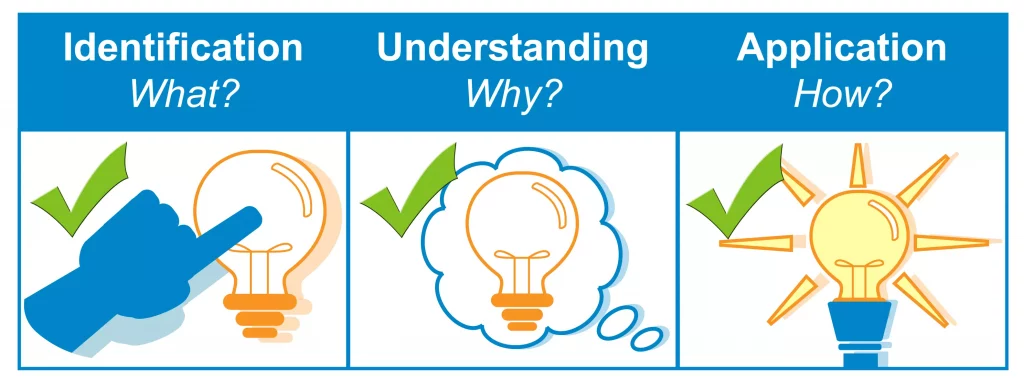
This manufacturing course by THORS eLearning Solutions covers identification of key terms, understanding of key concepts, and application of the covered topics.

*THORS uses the Bloom’s Taxonomy Methodology for our course development.

Certificate Awarded for Measurement System Analysis (MSA)

Example of certificate awarded upon successful completion of the course.

*upon successful completion

Related Posts

The factory engineer checks the quality of the manufactured part.
Manufacturing Fundamentals

Role of Quality Control in Manufacturing

Quality control is the often overlooked yet highly crucial aspect manufacturing. It serves to ensure products meet the necessary requisites of the effective functionality and durability.

Read More »

Learning Objectives

  1. Develop an understanding of the basic terminology associated with a measurement system and the measurement process.
  2. Identify the different types of variations present in a measurement system.
  3. Understand various studies used to evaluate measurement systems.
  4. Recall the applications for each of the different studies used to assess measurement systems.
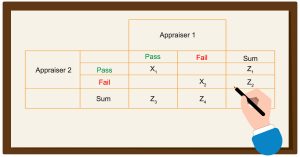
Measurement System Analysis (MSA) attribute contingency table comparing pass/fail results of appraiser 1 and appraiser 2, with counts (X1, X2) and totals (Z1–Z4), used to evaluate measurement consistency.
Measurement System Analysis (MSA) Course

Table of Contents

  1. MSA Concepts
    1. Measurement System
      1. Statistical Properties
      2. Calibration
    2. Measurement Process
      1. Measurement Values
      2. Measurement Errors
        1. Types of Measurement Errors
        2. Effects of Measurement Errors
      3. Measurement Uncertainty
      4. Measurement Reliability
        1. Accuracy
        2. Precision
    3. Variations
      1. Bias
        1. Stability
        2. Linearity
      2. Repeatability
      3. Reproducibility
      4. Gage Repeatability and Reproducibility
  2. Measurement System Studies
    1. Variable Measurement System Studies
      1. Stability Study
      2. Bias Study
        1. Numerical Method
        2. Control Chart Method
      3. Linearity Study
      4. Gage R&R Study
        1. Range Method
        2. Average and Range Method
          1. Measuring Parts
          2. Numerical Calculations
          3. Analysis
    2. Attribute Measurement System Studies
      1. Attribute Gage R&R Study
      2. Kappa Analysis
  3. Case Study Examples
    1. Case Study 1: Stability Study
    2. Case Study 2: Bias – Numerical Method
    3. Case Study 3: Bias – Control Chart Method
    4. Case Study 4: Linearity Study
    5. Case Study 5: Gage R&R Study – Range Method
    6. Case Study 6: Gage R&R Study – Average and Range Method
    7. Case Study 7: Attribute Gage R&R Study
    8. Case Study 8: Kappa Analysis

Request Course Demo