
Digital Marketing Agency

Active Electronic Circuit Basics

The THORS Active Electronic Circuit Basics course is designed to provide learners with a comprehensive understanding of different types of electronic circuits built using active electronic components. Ready to take the next step? Explore the course details and see everything we’ve packed into this program!

Learning Hours: 2

Representative or member of a corporation, educational institution, or trade organization? Contact us to discuss special pricing and additional benefits, including course activity reports for your group.

Contact Sales For Group Pricing

Purchase 30 Day Access

Course Description

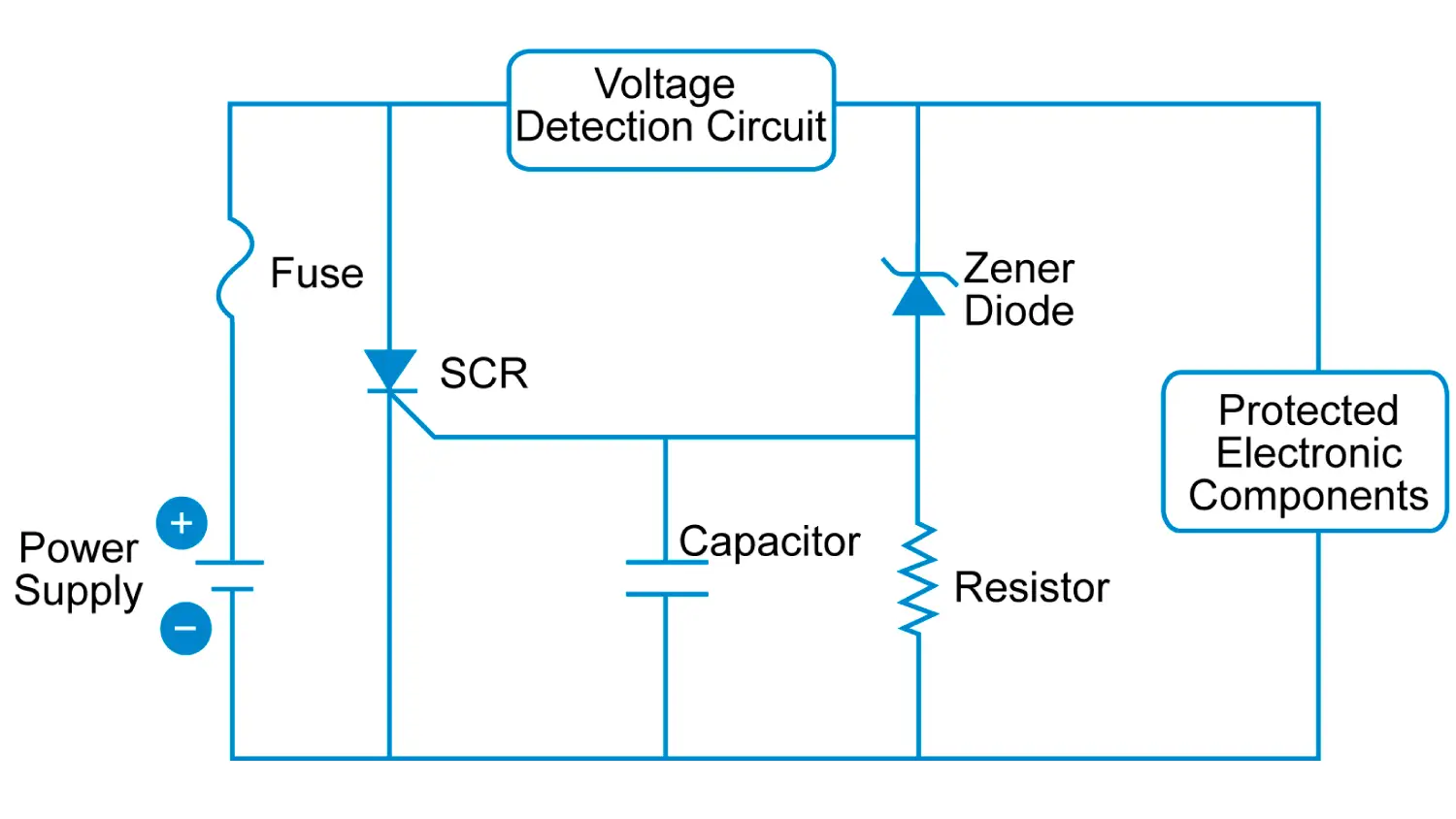
The THORS Active Electronic Circuit Basics course focuses on electronic circuits that can be built using active electronic components, such as transistors. This course covers power converters that are built using active electronic components, such as a diode or Silicon Controlled Rectifier (SCR). Power converters classified based on the power conversion method and the power supply design are also discussed in detail. Interactive quizzes are integrated to enhance the learning experience by allowing learners to assess their comprehension of the visually stimulating content.

YouTube player

Who will benefit from this active electronic circuit course?

Quality, manufacturing, engineering, design, test, purchasing, and sales functions at organizations that require an understanding of basic electronics and electronic components.

Course Classification

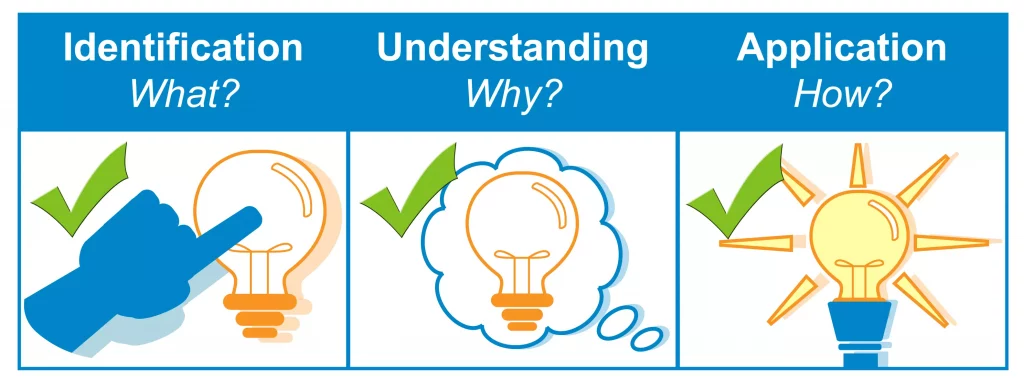
This manufacturing course by THORS eLearning Solutions covers identification of key terms, understanding of key concepts, and application of the covered topics.

*THORS uses the Bloom’s Taxonomy Methodology for our course development.

Certificate Awarded for Active Electronic Circuit Basics

Example of certificate awarded upon successful completion of the course.

*upon successful completion

Related Posts

Learning Objectives

  1. Recognize the different active electronic circuits built using transistors, such as a transistor switch, relay driver, beeper driver, motor driver, emitter follower, common emitter follower, transistor oscillator, astable multivibrator, and voltage regulator.
  2. Identify the applications of transistor-based gates, such as NOT gate, AND gate, NAND gate, OR gate, and NOR gate.
  3. Describe how power converter circuits are built using diodes and Silicon Controlled Rectifiers (SCRs).
  4. Distinguish the types of power converters classified based on their power conversion method and power supply design.
  5. Describe the working principles of AC to DC converters, DC to AC converters, AC to AC converters, and DC to DC converters.
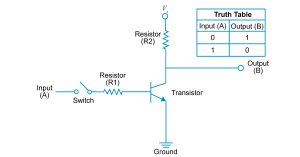
An illustration of an active electronic circuit built using resistors and a transistor, used as a transistor-based NOT gate.
Active Electronic Circuit Basics course

Table of Contents

  1. Transistor
    1. Transistor Switch
    2. Relay Driver
    3. Beeper Driver
    4. Motor Driver
    5. Emitter Follower
    6. Common Emitter Amplifier
    7. Transistor Oscillator
    8. Astable Multivibrator
    9. Voltage Regulator
    10. Transistor-Based Gate
      1. NOT Gate
      2. AND Gate
      3. NAND Gate
      4. OR Gate
      5. NOR Gate
  2. Power Converter
    1. Diode
      1. Full Wave Rectifier
      2. Inductive Load Protection
      3. Diode-Based Battery Backup
      4. Voltage Clamper
      5. Zener-Based Voltage Reference
    2. Silicon Controlled Rectifier (SCR)
      1. SCR-Based Controller
      2. Crowbar Protection
      3. Triac-Based Fan Regulator
    3. Types
      1. Based on Power Conversion Method
        1. AC to DC Converter
        2. DC to AC Converter
        3. AC to AC Converter
        4. DC to DC Converter
          1. Buck-Type DC to DC Converter
          2. Boost-Type DC to DC Converter
          3. Buck-Boost-Type DC to DC Converter
      2. Based on Power Supply Design
        1. Linear Power Supply
        2. Switch Mode Power Supply (SMPS)

Request Course Demo

Cookie Consent with Real Cookie Banner