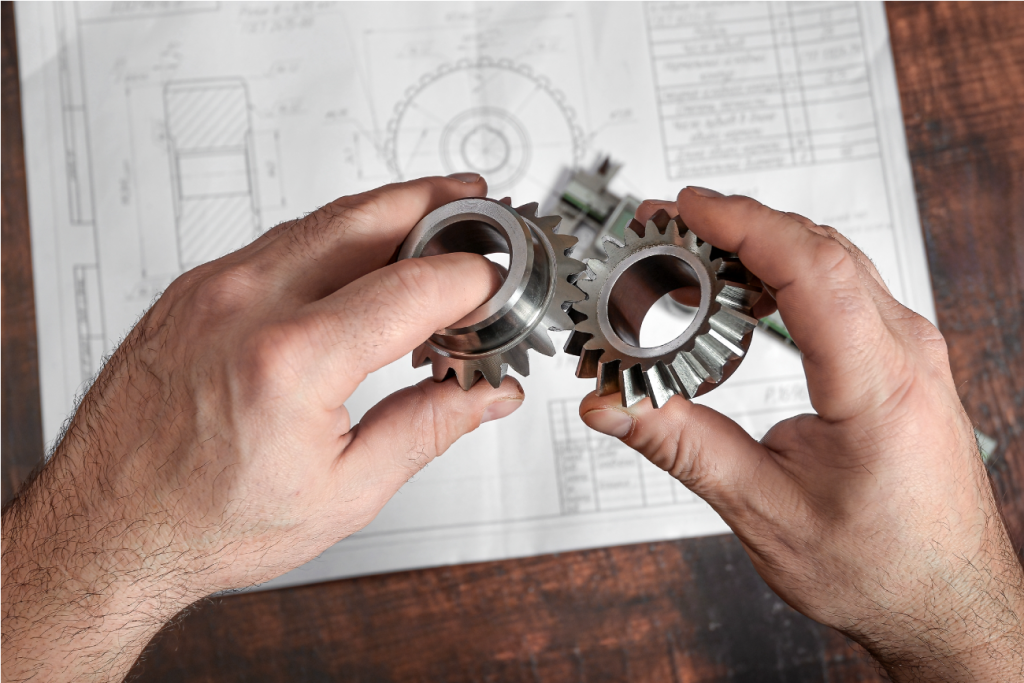
Bevel gear testing is essential because bevel gears are critical components used to transmit motion between intersecting shafts in automotive systems, industrial machinery, and aerospace applications. These gears often operate under heavy loads and high torque, so even a small defect in a bevel gear can lead to failures, inefficiencies, or safety risks.
Bevel gear testing is necessary to validate their performance under real operating conditions, ensuring accurate tooth alignment, proper tooth contact patterns, and reliable power transmission between mating gears.
Below are five key reasons why bevel gear testing matters, explained in detail with examples.
1. Ensures Accurate Load Transmission
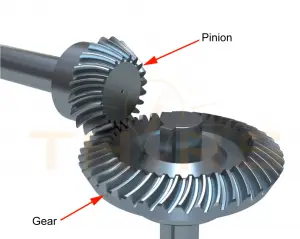
Bevel gear testing plays a critical role in ensuring accurate load transmission by confirming proper tooth contact, alignment, and uniform torque distribution under real operating conditions. It evaluates tooth contact patterns to ensure that the load is evenly shared across the tooth surface rather than concentrated at specific points. Proper testing also checks backlash and mounting alignment to prevent uneven meshing, excessive vibration, and noise.
For example, in an automotive differential system, bevel gear testing ensures that torque is evenly transmitted to both drive wheels. If the contact pattern is uneven, one side may experience higher stress, leading to accelerated wear, noise, and reduced vehicle performance.
2. Detects Manufacturing Defects
Bevel gear testing plays a crucial role in ensuring the reliability and performance of bevel gears by detecting manufacturing defects. It identifies defects such as micro-cracks, surface pitting, material discontinuities, and improper heat treatment that may reduce load-carrying capacity. Non-destructive testing methods, including ultrasonic inspection, dye-penetrant testing, and magnetic particle inspection, enable the detection of both internal and surface irregularities without damaging the gear. Testing also verifies hardness, surface finish, and material properties to confirm compliance with design specifications.
For example, in wind turbine gearboxes, an undetected defect in a single bevel gear can result in premature failure, costly downtime, and significant maintenance expenses.
3. Improves Efficiency and Performance
Bevel gear testing improves efficiency and overall performance by ensuring smooth and consistent gear operation under working conditions. It evaluates transmission error, vibration, and noise to confirm that power is transferred steadily between mating gears. Irregular meshing or excessive vibration can increase friction, generate heat, and reduce mechanical efficiency. By identifying these issues, testing helps maintain stable operation and optimal energy use.
For example, in industrial conveyor systems, properly tested bevel gears operate with reduced vibration and lower power loss, resulting in smoother motion and improved efficiency.
4. Enhances Durability and Lifespan
Bevel gear testing improves durability and service life by evaluating how bevel gears withstand repeated stress and high torque over time. It assesses fatigue strength and overall structural integrity under normal operating loads. Repeated load testing helps identify potential failure areas, such as tooth root cracks or surface damage, before the gear is placed in service. Hardness testing and material evaluation ensure that heat treatment provides adequate strength and wear resistance. Detecting defects or material weaknesses reduces the risk of premature failure and costly downtime.
For example, in heavy-duty truck differentials, bevel gears experience continuous torque fluctuations and shock loads. Proper testing ensures the gears can endure these repeated cycles without fatigue failure, extending operational lifespan and reducing maintenance frequency.
5. Supports Compliance and Quality Standards
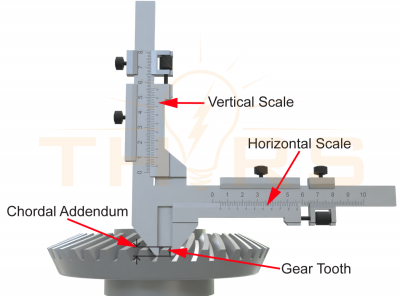
Bevel gear testing is essential to ensure that bevel gears comply with recognized industry standards such as AGMA and ISO specifications. It verifies critical parameters, including tooth geometry accuracy, surface finish, material properties and hardness, and backlash tolerances to confirm conformity with design and performance requirements. Inspection and performance test results provide documented evidence that the gear meets prescribed safety and load-carrying criteria. Testing also supports verification that manufacturing and assembly processes satisfy established quality control requirements.
For example, in automotive transmission systems, bevel gears must meet strict dimensional and performance standards to ensure smooth power delivery and passenger safety. Testing ensures that each gear is inspected and approved against the required tolerances and strength specifications before being released for production use.
Conclusion
Bevel gear testing ultimately brings all aspects of gear performance together, ensuring accurate load transmission, detecting manufacturing defects, improving efficiency, enhancing durability, and supporting compliance with industry standards. By validating these critical factors, it ensures each component can handle real-world demands with consistency and reliability across industries.
Do you want to learn more about bevel gear testing? Visit our website explore our Gear Chart Interpretation: Elemental Measurements on Bevel Gears course.