

Introduction
What does one wrong reading really cost? The cost of poor calibration is rarely a single bad number on a screen. Calibration is the routine check of a measuring tool against a more accurate, known reference, followed by an adjustment when the readings have drifted. When that check is skipped, rushed, or done wrong, every measuring tool it touches can pass bad work as good.
The three cases below come from space science, heavy equipment, and law enforcement. Each one shows a different way the bill arrives.
Hubble Space Telescope: A 1.3 Millimeter Mistake in Orbit
NASA, the United States space agency, launched the Hubble Space Telescope in 1990. Its first images came back blurry because its main mirror had been polished to the wrong shape. A NASA investigation board traced the flaw to a null corrector, an optical test instrument that guided the polishing by checking the mirror’s curve. One part inside it sat 1.3 millimeters out of position, and nobody verified its dimensions after assembly. Two other tests did show the error, but the team dismissed them as faulty.
The Cost: Perkin-Elmer, the American optics company that made the mirror, later agreed to pay NASA 25 million US dollars, and astronauts fitted corrective optics during a repair mission in 1993.
Lesson: In aerospace and precision optics, inspection instruments decide whether every part is accepted, so they need the same calibration and verification as the tools that make the part. An unverified instrument will keep approving parts that fall outside their design limits, just as Hubble’s mirror passed its tests while being polished to the wrong shape.
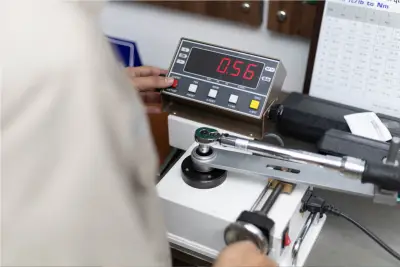
Terex Aerial Devices: One Torque Tool, 340 Machines
Terex South Dakota builds aerial devices, the truck-mounted booms that lift utility crews to power lines. In 2023, the company found that the torque tool tightening the bolts under each boom’s turntable was out of tolerance. Torque is the twisting force used to tighten a bolt, and out of tolerance means the tool’s output had drifted beyond its allowed range. Terex filed a recall report with the National Highway Traffic Safety Administration, the US agency responsible for vehicle safety. The report warned that loose bolts could fail and let the boom fall.
The Cost: Terex recalled 340 machines and agreed to pay 150 US dollars per machine to have the bolts tightened again, even though no failures had been reported.
Lesson: In heavy equipment and automotive assembly, a single torque tool may tighten thousands of fasteners, so its calibration affects every joint it tightens. When the tool drifts, the error spreads to every machine it worked on since its last good calibration. Terex learned this when it had to recall 340 machines built with one out-of-tolerance tool, a clear example of how the cost of poor calibration multiplies.
New Jersey Breath Testers: 20,000 Results Thrown Out
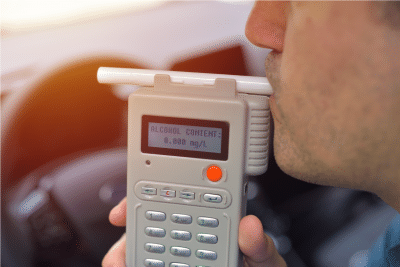
Police in New Jersey use the Alcotest, a breath-testing machine made by the German safety company Dräger, to measure alcohol in drivers’ breath. The state requires a certified thermometer check each time technicians calibrate the machines. The check confirms that the test solution used to calibrate the machine is at the correct temperature, because a solution that is too warm or too cool throws off the machine’s readings. In 2016, prosecutors charged a state police sergeant with skipping that step and falsifying the records. With no proof the check was ever done, nobody could say whether the machines he handled were measuring correctly.
The Cost: In 2018, the New Jersey Supreme Court ruled that more than 20,000 breath tests from the affected machines were inadmissible as evidence. In 2019, the court set up a panel of four judges to review the affected convictions.
Lesson: In medical device and pharmaceutical plants, auditors and customers review calibration records as closely as the New Jersey court did, because those records are the only proof that test results can be trusted. If a record is missing or false, every result from that instrument can be rejected, just as more than 20,000 breath tests were thrown out because one required check was never done.
Why the Cost of Poor Calibration Keeps Growing
None of these failures began with a dramatic breakdown. A test instrument went unverified, a torque tool drifted, and someone skipped a required check. The bills still arrived in the form of settlements, recalls, and thousands of results nobody could trust. The cost of poor calibration grows quietly, and it is almost always larger than the cost of doing the check.
Understanding the cost of poor calibration is only the start. To learn how calibration works, from the key concepts to the full process, THORS introduces its new Calibration of Measuring Tools course. Whether you are new to quality inspection or looking to strengthen your foundation, enroll today and keep every measurement worth trusting.


